Herb cabinet
Bay Laurel
Laurus nobilis. A symbolic and practical entry, not a medical monograph.
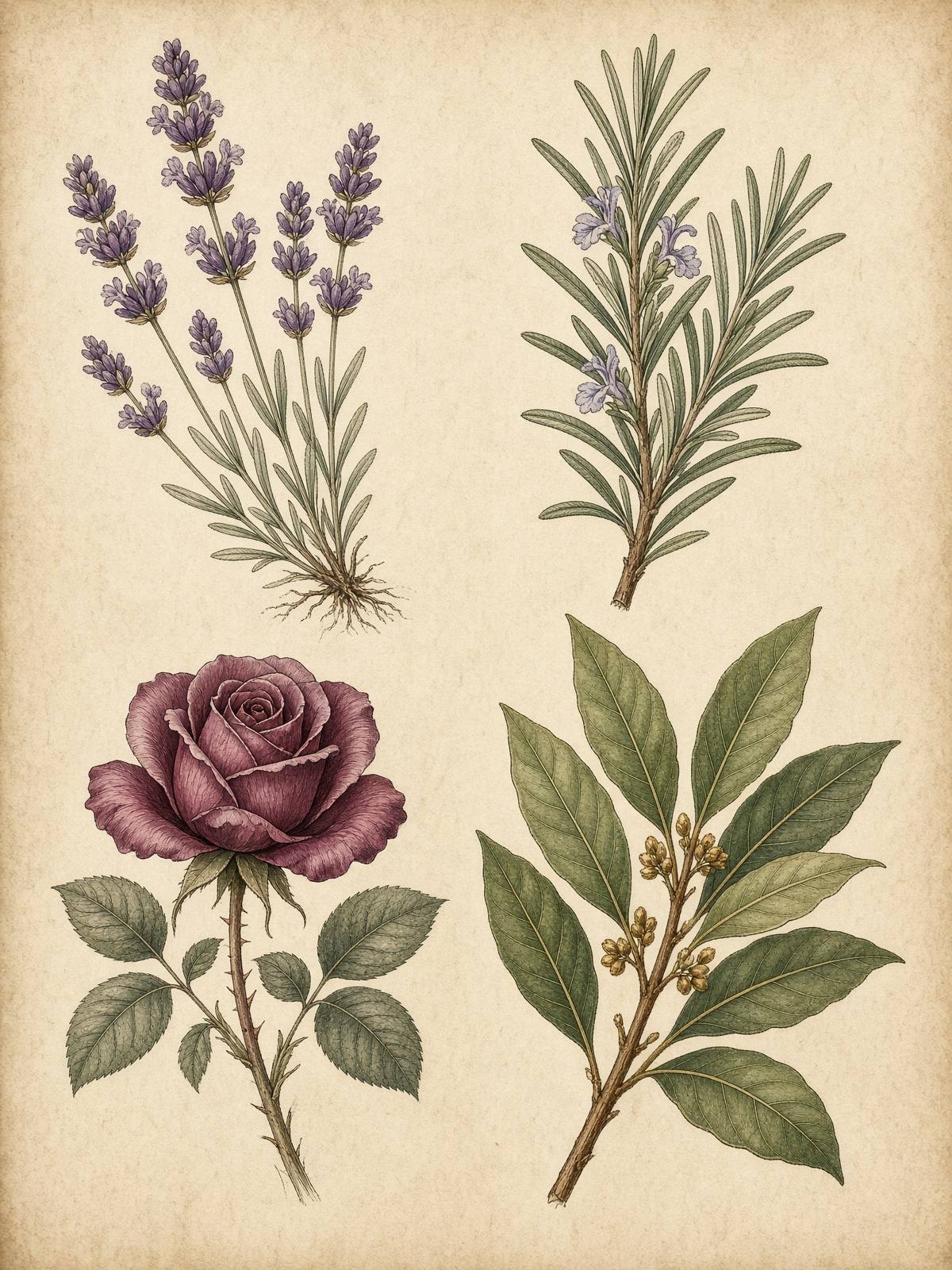
Bay laurel is an evergreen shrub or small tree with alternate, lance-shaped leathery leaves, dark green above, paler beneath, and a sweet resinous smell when snapped. Flowers are small and yellowish; the fruit is a dark berry on female plants. The culinary leaf is stiff, with a strong midrib, and is meant to be fished out of the pot. This description is not a sufficient identification key.
Names
| Common name | Bay Laurel |
| Botanical name | Laurus nobilis |
| Family | Lauraceae |
| Also called | sweet bay, true laurel, bay leaf |
| Uncertainty | Sweet bay is Laurus nobilis; cherry laurel (Prunus laurocerasus) and mountain laurel (Kalmia latifolia) are poisonous lookalikes by name, and California bay is a different tree. |
| Habitat and source | Laurus nobilis is native to the Mediterranean basin and is grown as a clipped herb or a tub tree far outside that range. Kitchen leaves are dried from identified culinary stock; hedge laurels in a parking lot are often an entirely different, toxic shrub. |
Symbolic correspondences
| Tag | Attribution |
|---|---|
| Element | Fire |
| Planet | Sun |
| Themes | the finished crown · a page well ended · solar pride without smoke · the leaf removed before the meal |
Folklore and history
The bay tree has a classical dossier. Greek myth says the nymph Daphne became a laurel as she fled Apollo, and the god wore her branches; the Pythian games and Roman triumphs used laurel as a crown for victory and for poetry. That is myth and civic custom, not a botanical assay. Culpeper puts the bay tree under the Sun. Cooks have used the dried leaf as a pot-herb for centuries and have learned to take it out before serving because it does not soften like thyme. Grieve gathers both the Apollo stories and the culinary note. Kew's name for the culinary tree is Laurus nobilis, in the laurel family, which is not the rose family where cherry laurel sits with its cyanide chemistry.
Burning bay to make wishes come true is a modern magical habit layered on the older crown. It is not guaranteed, and it is unsafe if the leaf is the wrong species: crushing or heating cherry laurel can liberate cyanide. The Wilde Altar therefore does not ask you to burn bay. We use a known culinary leaf as a bookmark for something you have already finished. Victory, in this house, is a completed page, not a smoke alarm.
Safety
Ritual applications
- A verified culinary bay leaf used as a bookmark in a book of finished work
- A leaf dropped into a stew as food-flavoring and removed before anyone eats
- A wreath of known bay, if you already have one, hung out of pet-reach and composted when brittle
An original working
The Leaf That Marks a Finished Page
To honor something you have completed, using a culinary bay leaf as a marker rather than as fuel.
Timing: Any quiet hour after something is actually done
- Material: One dried culinary bay leaf from a spice jar labeled bay or Laurus nobilis
- Material: A book, notebook, or printed page that holds finished work
- Material: A pen
- Material: A small envelope
- Material: A compost pail
- 1Confirm the leaf came from the kitchen spice, not from a hedge. If you are unsure, stop and use a paper leaf shape instead.
- 2Write the name of the finished thing on the envelope. Do not write a wish that someone else lose.
- 3Slip the bay leaf into the book at the page that proves the work is done, or into the envelope if there is no book.
- 4Close the book. Say the words. Do not set the leaf on fire.
- 5Leave it overnight at most, then take the leaf out so it does not crumble into the binding forever.
- 6Compost the leaf. Wipe your hands. Cook with a different leaf later if you want bay in food, and remove that one before serving.
Sun's leaf, I do not need a crown that smokes. This work is finished, and finished is a kind of laurel. I set you as a mark, then I give you back to the ground.
Close. Compost the culinary leaf. Do not burn it and do not eat it. If you used oil by mistake, do not pour it outdoors; wipe it into a trash-bound paper towel. The working ends with the book closed and the task named as done.
A practical action. Tell someone the work is finished, file it, or rest. A victory that is never announced to your own calendar did not quite land.
Substitutions
- A strip of paper cut in a leaf shape, if you cannot confirm the plant is sweet bay
- A sprig of culinary thyme as a different pot-herb, composted after, with no claim it is laurel
Growing and sourcing
Bay can be grown in a pot and brought indoors before hard frost, or in the ground in mild climates; it is slow and dislikes wet feet. Do not plant cherry laurel thinking you have planted a spice.
Beginner questions
- Can I burn any shiny laurel leaf from a hedge? No. Cherry laurel is poisonous and is not culinary bay; do not burn unidentified laurels.
- Is it safe to swallow a bay leaf for luck? No. Remove culinary bay from food; the whole leaf can injure the throat or gut.
- Does a bay crown force success? No. The crown is a classical symbol of victory already earned, not a guarantee.