Herb cabinet
Rosemary
Salvia rosmarinus. A symbolic and practical entry, not a medical monograph.
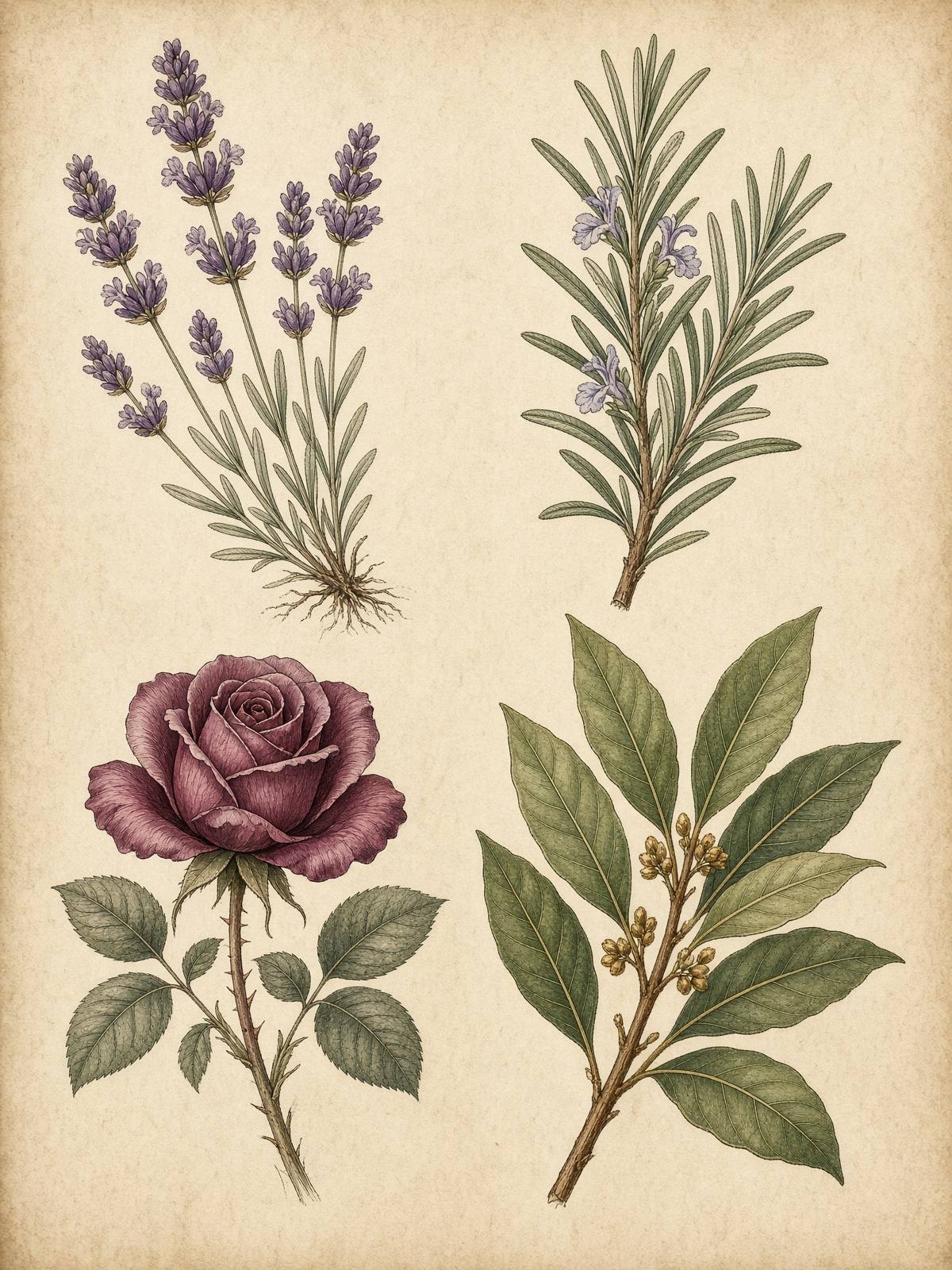
Rosemary is a woody evergreen shrub with narrow, dark, needle-like leaves, green above and pale beneath, on stems that become trunk-like with age. Small blue, sometimes white or pink, flowers appear in the leaf axils, on plants that may sprawl or stand as a hedge. Bruised leaves smell sharp, resinous, and clean. This description is not a sufficient identification key.
Names
| Common name | Rosemary |
| Botanical name | Salvia rosmarinus |
| Family | Lamiaceae |
| Also called | dew of the sea, Rosmarinus officinalis |
| Uncertainty | Moderate among cultivars, and serious if you meet bog rosemary, Andromeda, which is a different and toxic shrub. Needle-like leaves and the pine-camphor scent belong to culinary rosemary, and scent is still not a full key. |
| Habitat and source | It is a Mediterranean plant of sun and dry, stony soils, grown in pots and against warm walls far to the north of its easy range. Cold wet winters at the roots kill more rosemary than incantations save. |
Symbolic correspondences
| Tag | Attribution |
|---|---|
| Element | Fire |
| Planet | Sun |
| Themes | remembrance with a date · a sprig by the page · memory kept accurate · the name written down |
Folklore and history
Culpeper placed rosemary under the Sun. The older Latin name Rosmarinus, dew of the sea, matches a shrub of dry coasts more poetically than botanically, and it remains a useful memory tag now that the plant has been moved into Salvia. English folk record puts rosemary at weddings and funerals for remembrance. Shakespeare has Ophelia say, in Hamlet, 'There's rosemary, that's for remembrance.' Grieve repeats both the graveyard custom and the kitchen use. The line in the play is literature. It is also the fairest summary of why people still keep a sprig.
The legend that turns remembrance into a strong tea for the brain, or into an oil rubbed on for study, is a step past the record and into a health claim. This page will not take that step. Memory here means writing the name, the date, and the true detail before they blur, especially the names of queer dead and living who get edited out of family stories. A culinary needle in a pot of beans is food. A spoon of oil is not a scholarship potion, and large medicinal doses are a traditional caution in pregnancy.
Safety
Ritual applications
- A sprig beside a page where a name is written accurately
- A kitchen pinch in food you were cooking, kept separate from any claim of memory cure
- A date written next to the memory so it cannot drift
An original working
Remembrance on the Page
To record one name and one true detail you do not want blurred, without dosing yourself for focus.
Timing: On a memorial date, or any day you notice a story being smoothed until someone disappears from it.
- Material: A small rosemary sprig from a known bush or a grocery pack
- Material: A notebook
- Material: A pen
- Material: A date you can check
- Material: A cup of plain water that does not contain the herb
- 1Lay the sprig on the closed notebook. Do not make a tea of it for the working, and do not put oil on your temples.
- 2Open to a blank page. Write the person's name as they used it, not as a relative preferred.
- 3Write one concrete detail: a place, a sentence they said, a dish, a song. If you do not know, write that you do not know, which is more honest than invention.
- 4Add the date of the writing, and the date of the event if you have it. Read the words of the rite.
- 5Drink the plain water. Leave the sprig where it is until the ink is dry, then move it to the kitchen or the compost.
- 6Tell one person who should hold the memory, if that sharing keeps someone from being erased and does not out a living person who is not ready.
I write the name as it was lived. Remembrance is ink and a date, not a drug. I will not sand the truth smooth to comfort a lie.
Close. Compost the sprig or use it that day as a normal culinary flavor in food. Do not store a rosemary oil as part of the rite, and do not brew a 'memory cup.'
A practical action. Put the notebook where you will find it next year on the same date, and set a reminder if your memory, like most, needs a tool.
Substitutions
- Thyme on the page, if rosemary is something you have been told to avoid and you still want a kitchen herb as a paperweight
- The notebook alone, which is the actual remembrance
Growing and sourcing
Give rosemary sun, sharp drainage, and a pot if your winters are wet and cold; many cultivars are tender. Do not confuse it with bog rosemary, and do not harvest it as an essential oil project for skin or pets.
Beginner questions
- Where does 'rosemary for remembrance' come from? From English custom, and from Ophelia's line in Shakespeare's Hamlet. It is not a clinical claim.
- Is rosemary oil a study aid here? No. Do not swallow the oil or treat the herb as a brain drug.
- What is the current botanical name? Salvia rosmarinus. Rosmarinus officinalis is the older name you will still see on labels.